
GOLIATH GROUPER FISHING FLORIDA KEYS: WHAT TO EXPECT & CATCH-AND-RELEASE TIPS
Goliath Grouper Fishing Florida Keys: What to Expect & Catch-and-Release Tips
What would it feel like to hook a grouper powerful enough to pull your rod toward an underwater wreck? Goliath grouper fishing in the Florida Keys offers the possibility of encountering one of the largest and strongest fish living around Florida’s reefs and wrecks. These remarkable fish are known for their enormous size, powerful strikes, and the challenge of bringing them away from heavy structure.
For visitors planning a charter from Marathon or Key West, goliath grouper are a very different target from yellowtail snapper, mutton snapper, or other commonly caught reef fish. The experience focuses on heavy tackle, proper fish handling, and responsible catch-and-release rather than bringing home fish for dinner.
Quick Answer: Goliath Grouper Fishing in the Florida Keys
- Where they live: Around shipwrecks, bridges, rocky ledges, artificial reefs, and other substantial underwater structure.
- Best charter style: Reef, wreck, or structure-focused fishing with appropriate heavy tackle and experienced crew.
- Seasonal planning: Goliath grouper may be encountered throughout the year. The Two Conchs Fishing Calendar specifically mentions them on Gulf wrecks in December.
- Trip length: Discuss a six-hour reef/wreck trip or a longer charter when reaching distant structure is part of the plan.
- Harvest rules: Catch-and-release is the appropriate expectation. Limited harvest requires a special permit and is prohibited in many areas, including the Atlantic coast of the Keys and all federal waters.
- Important safety rule: Large goliath grouper must remain in the water during handling and release.
What Makes Goliath Grouper Different From Other Grouper?
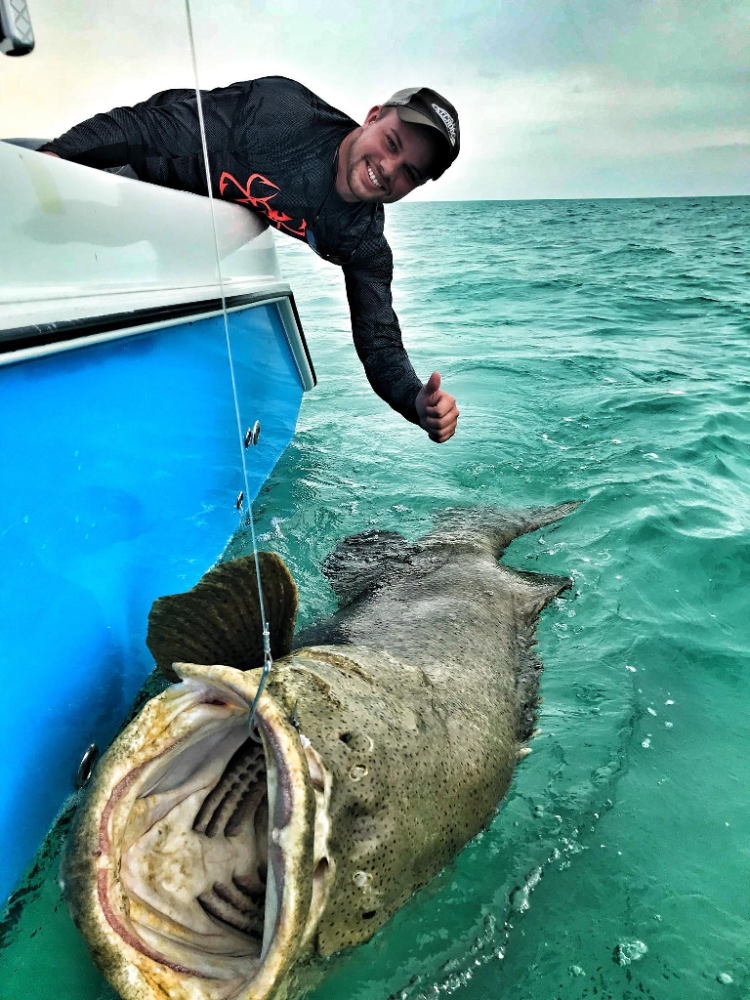
Goliath grouper are the largest Atlantic grouper species and can reach extraordinary size. The Florida Fish and Wildlife Conservation Commission reports that these fish can grow to more than eight feet in length and weigh hundreds of pounds.
Adult goliath grouper have massive mouths, thick bodies, rounded tails, and mottled brown or yellowish coloring. Juveniles often display prominent dark bands along their sides.
Unlike smaller grouper species commonly targeted for food, goliath grouper are best approached as a specialized catch-and-release experience.
They are also important members of the reef ecosystem. Their slow growth, long lives, and tendency to gather in certain areas make them vulnerable to overfishing. Florida’s highly restricted harvest regulations reflect those conservation concerns.
Where Can You Encounter Goliath Grouper Around the Florida Keys?
Structure is central to understanding goliath grouper habitat. Juveniles commonly use mangrove and estuarine areas, while larger adults are strongly associated with offshore reefs, wrecks, bridges, and rocky formations.
These areas offer shelter and opportunities to feed on bottom-associated fish, crustaceans, and other marine life.
Wreck Fishing
Shipwrecks and artificial reefs provide the substantial underwater structure preferred by many adult goliath grouper. Large fish may remain close to openings, ledges, or sections of a wreck where they have cover.
For anglers, this creates an immediate challenge. When hooked, a grouper may pull toward the structure, making it difficult to maintain control of the fish.
Bridges and Rocky Structure
Goliath grouper may also occupy areas around bridge pilings, rocky ledges, and other hard structure. Their presence depends on location, habitat, conditions, and the availability of food.
Not every wreck or bridge produces a suitable fishing opportunity. Choosing an appropriate location requires local knowledge and an understanding of how the fish can be handled safely.
What Is It Like to Hook a Goliath Grouper?
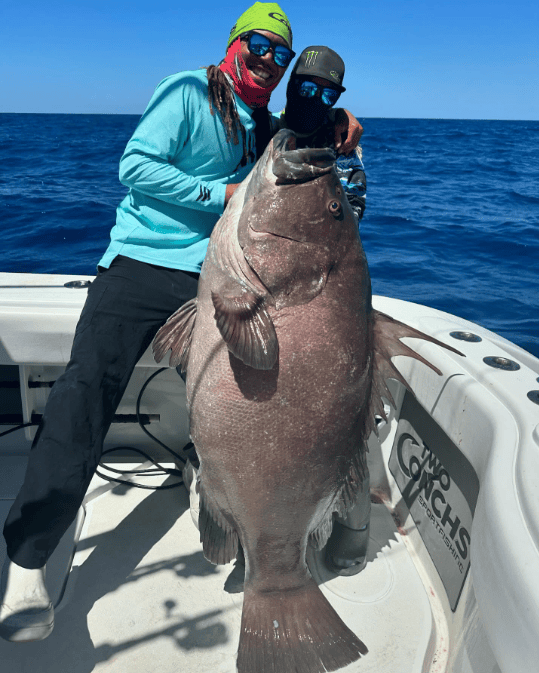 The most memorable part of a goliath grouper encounter is often the initial power of the fish. Rather than making long surface runs like mahi-mahi, these heavy-bodied fish may try to return immediately to the structure where they were hooked.
The crew must use tackle appropriate for the species and conditions while controlling the line and helping the angler avoid unnecessary strain on the fish.
There is also an important difference between successfully hooking a fish and completing a responsible fishing encounter. Landing a very large grouper at boatside requires care, and proper release matters as much as the fight itself.
For visitors, this means a goliath grouper trip should be planned with realistic expectations about the physical effort involved and the conservation practices that apply.
When Is Goliath Grouper Fishing Best in the Florida Keys?
Goliath grouper can be present around suitable Florida Keys structure at different times of year. Conditions, habitat, fish behavior, and the ability to reach appropriate fishing grounds matter more than selecting one supposedly guaranteed month.
The Two Conchs Florida Keys Fishing Calendar specifically mentions goliath grouper among the fish associated with Gulf wrecks in December.
December also brings opportunities for snapper, grouper, cobia, kingfish, and mackerel in the broader Florida Keys fishing calendar.
Visitors planning a fall or winter vacation should discuss reef and wreck options with the crew. A change in wind or sea conditions can influence which areas are practical to fish, particularly when offshore or Far Gulf runs are involved.
Because goliath grouper are subject to special management rules, fishing opportunity and legal harvest opportunity are not the same thing.
Why Goliath Grouper Are Usually a Catch-and-Release Experience
Florida allows only a very limited recreational goliath grouper harvest through a special permit-and-tag program. Harvest is otherwise prohibited, and the limited program does not authorize harvest everywhere.
FWC closes the Atlantic coast of the Florida Keys, all federal waters, and other designated areas to harvest. The permitted harvest season is March 1 through May 31 in eligible waters, subject to program rules.
For a typical Two Conchs visitor, the appropriate expectation is a responsible catch-and-release encounter, not keeping a goliath grouper.
Why Large Goliath Grouper Must Stay in the Water
FWC explains that a large goliath grouper’s skeletal structure cannot properly support its weight out of the water. Bringing a large fish aboard can cause serious injury and may be fatal.
Large goliath grouper should remain in the water throughout handling and release. FWC also recommends keeping smaller fish in the water when removing hooks.
If a fish shows signs of barotrauma, appropriate release equipment and techniques may be necessary to return it safely to depth.
Photographs should never delay release or require lifting a large grouper out of the water. The fishing experience can still be memorable with a proper boatside photograph when conditions allow.
For full guidance, consult FWC’s Goliath Grouper Regulations and Release Guidelines.
What Charter Length Should You Book?
A goliath grouper opportunity is usually best discussed within a reef, wreck, or structure-focused charter rather than assuming every boat offers a dedicated goliath grouper trip.
Four-hour trips: These can be suitable for nearby reef or wreck fishing, but may offer limited time if your goal involves reaching particular structure or using specialized tackle.
Six-hour trips: These provide greater flexibility for fishing different areas and adjusting to current, weather, or other species opportunities.
Eight-hour or longer trips: These may be appropriate when the fishing plan involves more distant structure or a broader Gulf or offshore fishing experience.
The right choice depends on the vessel, fishing grounds, weather, and whether an appropriate goliath grouper opportunity is actually available for your dates.
Marathon vs. Key West for Goliath Grouper Fishing
Marathon fishing charters offer access to Middle Keys reef and wreck areas, along with Gulf-side fishing opportunities when conditions permit. Marathon is a practical departure for visitors staying around Key Colony Beach, Duck Key, Isla Bella, and the surrounding Middle Keys.
Key West fishing charters are convenient for visitors staying in Key West who want to explore reef, wreck, and offshore fishing options.
For goliath grouper, selecting the appropriate vessel, fishing area, and crew is more important than assuming one departure location is always better.
Local Captain Insight: Planning a Responsible Goliath Grouper Encounter
A goliath grouper encounter requires more than simply finding a large fish. The crew must evaluate the location, underwater structure, tackle, current, and whether the fish can be handled and released appropriately.
Captain Jack and the Two Conchs team bring Florida Keys fishing experience to reef and wreck charter planning. Matching the fishing plan to conditions, group experience, and suitable fishing grounds is especially important when large, powerful fish may be involved.
Before booking, tell the crew if a goliath grouper encounter is your goal. They can discuss whether that is a realistic option for your preferred trip and what other reef or wreck species may offer productive fishing during your visit.
Plan Your Goliath Grouper Fishing Experience with Two Conchs
If you are interested in goliath grouper, start by discussing your travel dates, preferred departure location, group size, and fishing experience with the Two Conchs crew.
Ask whether a reef or wreck fishing charter is appropriate for your goals and what type of responsible catch-and-release experience may be possible.
Explore the Two Conchs Charter FAQs or contact Two Conchs to discuss suitable charter options.
For visitors interested in goliath grouper fishing in the Florida Keys, the right experience combines the excitement of a powerful fish with responsible handling, realistic expectations, and a charter plan built around the conditions.
Frequently Asked Questions
FAQ
Can you catch goliath grouper in the Florida Keys?
Goliath grouper inhabit suitable reefs, wrecks, bridges, and offshore structure around Florida. Catch-and-release opportunities may be possible in the Florida Keys, but visitors should confirm suitable charter options and follow current fishing regulations.
Can you keep a goliath grouper in the Florida Keys?
Goliath grouper harvest is prohibited without a special permit and tag. Florida’s limited harvest program is restricted to certain waters and seasons, and the Atlantic coast of the Keys and all federal waters are closed to harvest. Most charter guests should expect catch-and-release.
Are goliath grouper dangerous to catch?
Goliath grouper are extremely powerful fish. Their size and tendency to remain near heavy structure make proper tackle, crew supervision, and careful handling important. Large fish must remain in the water during release.
What type of charter is best for goliath grouper?
A reef or wreck fishing charter with appropriate equipment and experienced crew is the most relevant trip style. Ask Two Conchs whether a goliath grouper opportunity is realistic for your dates and chosen departure location.
Can you take pictures with a goliath grouper?
Yes, when photography does not delay release or compromise the fish’s safety. FWC says large goliath grouper must remain in the water, so any photograph should follow responsible boatside handling guidance.
When should I plan a goliath grouper fishing trip?
Goliath grouper may be encountered around suitable structure at different times of year. The Two Conchs Fishing Calendar mentions them on Gulf wrecks in December, but conditions and charter suitability determine whether an opportunity is practical.
Official Planning Sources
- FWC Goliath Grouper Regulations and Release Guidance
- FWC Limited Goliath Grouper Harvest Program
- NWS Florida Keys Marine Forecast
- Two Conchs Florida Keys Fishing Calendar